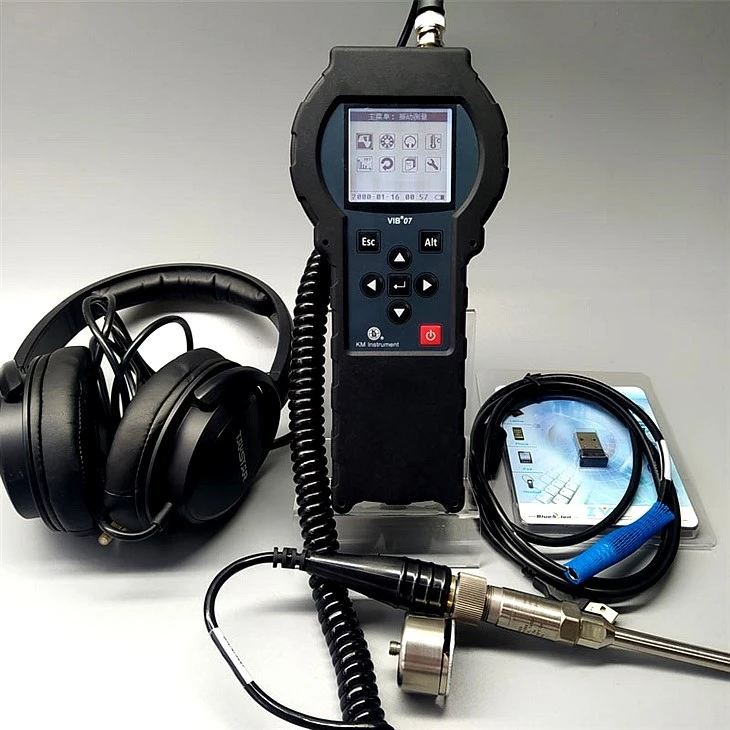
Application Areas And Setup Tips For Vibration Analyzers
1.Application fields of vibration analyzer
Vibration analyzers are widely used in many fields. Here are some common application areas:
Industrial maintenance: Vibration analyzers can be used to monitor the vibration characteristics of rotating machinery equipment, helping engineers perform fault diagnosis and predictive maintenance. By monitoring changes in vibration signals, potential faults can be discovered in time and corresponding maintenance measures can be taken to avoid equipment damage and increased downtime.
Building structures: Vibration analyzers can be used to evaluate the vibration characteristics of building structures, such as bridges, buildings, etc. By monitoring the vibration response of the structure, the stability and safety of the structure can be evaluated, and timely measures can be taken to avoid structural failure and damage.
Automotive Engineering: Vibration analyzers are also widely used in the field of automotive engineering. It can be used to evaluate the vibration characteristics of various vehicle components, such as the engine, drivetrain, chassis, etc. Through vibration analysis, vehicle faults can be detected and diagnosed, and vehicle performance and ride comfort can be optimized.
2. Vibration analyzer setup skills
Proper vibration analyzer setup is critical to obtaining accurate and reliable vibration analysis results. Here are the highlights of some setup tips:
Choose the right sensor: Choose the right vibration sensor according to your needs, such as an accelerometer or speedometer. Different types of sensors are suitable for different frequency ranges and applications.
Determine the sampling rate and sampling duration: Determine the appropriate sampling rate and sampling duration based on the frequency characteristics of the object being measured and the required analysis accuracy. Higher sampling rates capture more high-frequency information, but increase data processing complexity and storage requirements.
Calibrate and verify: Calibrate and verify the vibration analyzer regularly to ensure the accuracy and reliability of its measurement results. Calibration can be performed using a standard reference source or a calibration device.
Reasonable selection of analysis methods: According to specific application requirements and analysis purposes, select appropriate vibration analysis methods, such as time domain analysis, frequency domain analysis, order analysis, etc. Different analysis methods are suitable for different vibration problems and fault diagnosis needs.