


Vibration Meter
Rich experience
Our products are developed from over 30 years experience and designed to achieve all necessary parameters to conduct a reliable machine analysis.
Technological development
We provides turnkey solutions for machinery Condition Monitoring in the predictive maintenance field. We develops and manufactures vibration measuring instruments, machine condition monitoring equipment and software with user functionality in mind.
Wide range of products
Vibration Analyzer; Portable Rotor Balancer; vibration meter; Wireless intelligent vibration sensor; Accelerometer; Dynamic Balancing.
Professional team
There is/are Above 50 People R&D Engineer(s) in the compan. With a professional R & D team and leading scientific research ability.
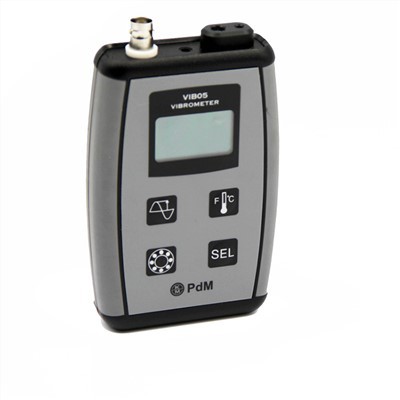


What Is a Vibration Meter
Vibration meter is a vibration measuring instrument – often handheld – used in product development and manufacturing for vibration assessment, diagnostics, and quality control.
A vibration meter can feature a range of analysis options, from simple broadband measurements to an octave or FFT-based frequency analysis and even time-domain integration to velocity and displacement. Single, wide-frequency band measurements are useful to quickly see the vibration indicator, used when evaluating the general condition of a machine or the effectiveness of vibration isolation measures.
Why Do Vibration Measurements Need to Be Conducted Using a Vibration Meter
Vibration may influence the durability and reliability of machinery systems or structures and cause problems such as damage, abnormal stopping and disaster. Vibration measurement is an important countermeasure to prevent these problems.
Research and development
To develop and design more reliable products, vibration measurement and shock measurement is operated in testing of samples or finished products.
Improving the quqlity of product
To solve the problems caused by vibration and improve the quality of products, vibration measurement is operated for a sample, of mass-produced or all completed products to eliminate inferior pieces and produce satisfactory ones.
Safety management in factoies
To prevent the breakdown and trouble from machinery, vibration in measured periodically and compared to the vibration at initial condotion or at normal condition after the maintenance for judging the deterioraten oc equipment.
Maintenance of production systems
Vibration measurement is used not only when the problem occurs but also when the daily maintenance is performed. The production system is kept in operation by detecting the deterioration or possible failure of a part through adverse vibration patterns.
Inspection of pollution
To inspect the influence of vibration on people at a specified factory, construction site, or through road traffic and trains, vibration measurement is performed to judge whether it is within the allowable level.
5 Types of Vibration Meters
Vibration meters often help reliability professionals start a predictive maintenance (PDM) or remote condition monitoring program.
Handheld vibration meter tools
A handheld vibration meter, vibration meter is best when you need a highly reliable screening device that can provide repeatable, overall vibration readings. Unlike a pen, also measures specific variables, including bearing condition and temperature.
The severity scale is easy to understand and displays simple texts (good, satisfactory, unsatisfactory, unacceptable) to indicate bearing condition and overall vibration. The vibration measurement device reads a wide range of frequencies, and the data is accessible from anywhere via a smart device, such as a laptop or mobile phone.
Portable vibration tester tools
A portable vibration tester is a strong great option when critical machines can be safely and easily reached by a technician. And while both handheld vibration testers and vibration analyzers can capture vibration data and diagnose machine faults, they do have different capabilities.
Handheld vibration analyzer tools
Like vibration testers, a portable vibration analyzer can provide users with immediate vibration measurement information about machinery health, including motors, fans, and blowers. Both can identify the four most common faults: Imbalance, misalignment, looseness, bearing damage. They can also often tell you the fault location and severity.
Wireless vibration analysis sensor
A wireless vibration analysis sensor is best if your organization has dozens of critical machines. When a critical asset fails, it can shut down production and even harm other machines. These sophisticated sensors alert you of potential machine faults well in advance, including showing the severity of the problem, so you can act to prevent failure.
Wired vibration monitoring system
A wired vibration monitoring system is best for condition monitoring of production-critical machines. Can monitor turbine generators, paper machines, high-speed spindles, and multiple drive machines. These advanced vibration meters provide complete vibration analysis for complex machines.
Benefits of Using a Vibration Meter
There are several benefits to using a vibration meter, including:
Maintenance
Vibration meters can help detect potential problems in equipment and equipment before they become major problems. This avoids costly repairs and downtime.
Safety
High levels of vibration can be dangerous to both machines and people. Seismometers can help identify and address potential safety hazards.
Performance
By measuring the level of vibration you can optimize machinery and equipment. Which leads to increased efficiency and productivity.
Quality control
The vibration meter ensures that products meet quality control standards by identifying potential problems with the manufacturing process.
Application of Vibration Meters
● Industrial applications
Predictive maintenance
By regularly monitoring vibrations in machinery, operators can detect anomalies and potential issues before they lead to costly breakdowns. This proactive approach helps reduce downtime and maintenance costs.
Quality control in manufacturing
In manufacturing, maintaining product quality is paramount. Used to ensure that production machinery operates within specified tolerances. Any deviations in vibration patterns can indicate defects in the manufacturing process.
Structural health monitoring
Vibration meters are essential for assessing the structural integrity of buildings and bridges. They help engineers identify potential weaknesses and make informed decisions regarding maintenance or repairs.
● Construction industry
Foundation assessment
When constructing buildings and infrastructure, it's crucial to assess the soil and foundation conditions. It help engineers evaluate the impact of construction activities on nearby structures and ensure their stability.
Equipment calibration
Construction machinery, such as cranes and pile drivers, must be calibrated to prevent excessive vibrations that could lead to accidents or structural damage. Aid in this calibration process.
● Automotive sector
Vehicle testing
In the automotive industry, they are used to test vehicle components for durability and performance. From engine components to suspension systems, these devices ensure that vehicles can withstand various road conditions.
Ride comfort analysis
Car manufacturers use these meters to assess ride comfort, identifying and reducing vibrations that could lead to discomfort for passengers.
A vibration meter is a handheld device with a built-in vibration sensor and a display screen. It is used to check vibration levels of an asset or a component part.
Meters provide an instant reading of vibration velocity, acceleration, and displacement. The best vibration meters can also check equipment temperature and bearing condition.
Most modern vibration meters store vibration measurements, so that technicians can easily access a particular asset's history and spot changes from normal patterns.
Some vibration monitors can also share vibration data so that teams can access it remotely, by smartphone or tablet.

Actually, the vibration meter device is divided into two, namely vibration meter with magnetic base and vibration meter with vibration sensor. Both have the same function and method of use.
First of all, let's turn on the vibration meter by pressing the on / off button of the device. You can set the unit of measurement to m / s or mm / s, depending on your needs. Then, simply attach the sensor and the base of the device to the surface of the object to be measured.
Hold for a few seconds until a number appears on the device screen, don't write down the numbers on the screen yet if it's still up and down. Furthermore, you can record numbers and calculate the vibration level, by looking at the mode, median, and mean of the vibration measurement sample. Finally, just remove and turn off the vibration meter device again.
Important Parameters of Vibration Meters
The vibration of an object could be either segmental (impulsive), or whole-body (continuous). In any vibration meter, the three main characteristics measured are the amplitude, frequency, and acceleration.
A vibrating body travels, on either side of its stationary position, to a specific maximum distance. Amplitude is the distance to the extreme position on either side from the fixed position and is measured in meters (m). Vibration intensity is dependent upon this amplitude.
A vibrating object that shifts back and forth from its usual stationary location produces a complete vibration cycle on moving from one extreme to another extreme and then back again. This count of the cycles completed by the vibrating object is measured as frequency, measured in hertz (Hz).
During each vibration cycle, the velocity of this object varies from zero to the maximum. It moves most rapidly as it passes to an extreme position through its natural stationary position. The vibrating body slows down as it reaches the extreme, where it stops and then travels across the stationary position towards the other extreme in the opposite direction. During each vibration period, the magnitude of the acceleration varies from zero to the maximum, measured in meters per second square (m/s2) when the vibrating body shifts farther away from its usual stationary location, the velocity increases.
The parameters used for measuring vibration are universally in metric units. The acceptable range of both the types of vibration is between 1-80 Hz, and in cases where the value exceeds creates annoyance and discomfort.
Our Factory
KM Instrument is a global leader in condition monitoring technology. we provides turnkey solutions for machinery Condition Monitoring in the predictive maintenance field. we develops and manufactures vibration measuring instruments, machine condition monitoring equipment and software with user functionality in mind. Our products are developed from over 30 years experience and designed to achieve all necessary parameters to conduct a reliable machine analysis. With a professional R & D team and leading scientific research ability, the KM series products from KM have a solid reputation for quality and excellent performance.
Our products are used widely in industry and we believe our success comes from our focus on simplicity with a high performance to cost ratio. We continue to move forward and establish new markets in developing areas. The strength of our product range comes through development which has involved some of the world's leading professionals in vibration analysis.

Our Certificate
ISO9001,CE,IP67

