


Portable Balancer
Rich experience
Our products are developed from over 30 years experience and designed to achieve all necessary parameters to conduct a reliable machine analysis.
Technological development
We provides turnkey solutions for machinery Condition Monitoring in the predictive maintenance field. We develops and manufactures vibration measuring instruments, machine condition monitoring equipment and software with user functionality in mind.
Wide range of products
Vibration Analyzer; Portable Rotor Balancer; vibration meter; Wireless intelligent vibration sensor; Accelerometer; Dynamic Balancing.
Professional team
There is/are Above 50 People R&D Engineer(s) in the compan. With a professional R & D team and leading scientific research ability.


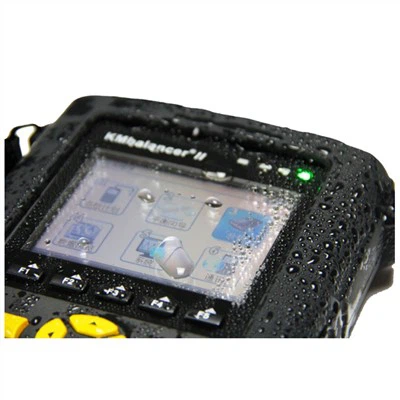
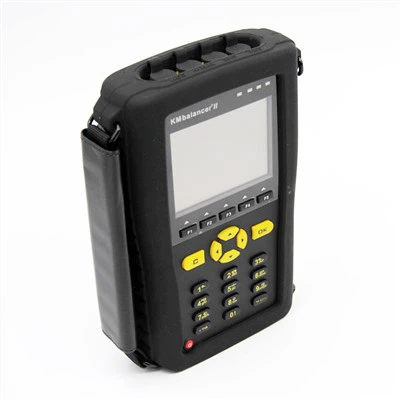
What Is Portable Balancer
Portable balancer is required for turbines, fans, propellers, and other rotating components in machinery that cannot be removed from the field and brought to a balancing facility. While portable balancer throughout the world is similar in process to static dynamic balancing, it is much more difficult to undertake because portable balancer often has to be conducted under less than ideal conditions that are beyond the control of the portable balancer technicians.
Most portable balancer machine electronics use two-channel or four-channel data acquisition. Knowing how to identify a system that is in resonance is an important part of a portable balancer technician's job. There are telltale signs in the raw portable balancer data from the portable balancer machine.
The Importance of Portable Balancer
There are numerous reasons why portable balancer is crucial for the maintenance and proper functioning of mechanical components, such as:
Preventing machinery damage: An unbalanced rotor can cause excessive wear and tear on seals, bearings, and other major components, leading to breakdowns and reduced lifespan.
Improved performance: Balancing the rotor reduces vibrations caused by imbalance, resulting in improved efficiency and performance of the machinery.
Extended lifespan: Properly balanced rotors are less prone to wear and tear than unbalanced ones, leading to a significantly longer service life.
Noise and vibration reduction: Unbalanced rotors generate excessive noise and vibration, disrupting personnel and potentially damaging the machine over time. Balancing mitigates these issues.
Safety considerations: Unbalanced rotors can shatter, collapse, or disintegrate at high speeds, posing serious safety risks to nearby personnel. Balancing ensures a safe and stable operation.
Portable balancer is a crucial part of any machine's operating and maintenance program. It can be challenging to understand how well a machine is running by just looking at it or listening to it, but with portable balancer, you have the opportunity to see what's going on inside that unit and make decisions based on the data to keep the machine and the process running.
Portable balancer contributes to a company's bottom line. So, if you're interested in learning more about how portable balancer can elevate your business and the company's efficiency, then you should know how vital and beneficial it can be.
Here are the top five benefits of machinery portable balancer and analysis:
It prevents costly downtime
One of the main benefits of machine portable balancer is that it can help you prevent costly downtime and keep the process running. By understanding the condition of your machines and catching problems before they turn into failures, you can keep your machines running and save yourself the money that would have been lost had the machines broken down. In addition, this will allow your employees to spend time on more productive tasks.
Portable balancer increases overall safety
Another benefit of portable balancer is that it can help you increase overall safety. Hazardous conditions can arise when a machine is running roughly. You can take preemptive action to keep your employees safe and out of harm's way with portable balancer. The sooner issues are detected, the more likely it is that they will be easily fixed. In addition, this type of proactive maintenance will save you money in the long run and make your machines safer for everyone who works around them. There is nothing more important than the safety of your employees. Having a reliable choice is being proactive about employee safety and is a huge added benefit to using a robust machinery vibration analysis.
It also saves money on repairs
Portable balancer can help you save money on repairs. When an issue is detected early, less work will be needed to correct the problem, and you'll be less likely to have to replace a machine because of extensive damage. In addition, with vibration monitors, you can be proactive about the condition of your equipment and avoid major production failures.
This will also save you money on the labor required for maintenance on machine repairs. Instead of spending the time and money to fix a machine, you can spend that time and energy on other projects. This boost in efficiency, productivity, and increased savings will have a tremendous impact on your bottom line.
Portable balancer helps you understand your machines
The best benefit of portable balancer is that it allows you to understand your machines. By understanding each machine's normal vibration readings and detecting when something is wrong, you can discover problems and make repairs right away. This understanding will help you keep your machines running longer and more efficiently.
Below are the types of issues that machine vibration analysis can show you:
● Imbalance
● Mechanical looseness
● Bearing failures
● Misalignment
● Bent or bowed shafts
● Electrical faults in motors
● Resonance and natural frequencies (critical speeds)
● Cavitation in pumps
● Gearbox failures
Vibration analysis can give you the information necessary to make decisions about your machines. In addition, the faster issues are detected, the more likely they will be able to be fixed in a timely and effective manner.
Portable balancer means you can get better performance from your machines
Machine portable balancer can help you get better performance from your machines. Having data to show when problems are detected makes it easier for you to decide how to improve your machines' performance.
A vibration switch will help you do this. This protection device senses vibration through its vibration switches and triggers an alarm or shuts the machine down if it reaches a specific threshold. This will help keep your machines running longer and avoid catastrophic shutdowns and machine issues.
Portable balancers are devices that detect vibration, shock, and sound. They can be used in machinery to detect problems before they happen. Portable balancers work by detecting the motion of a material or object by sensing its frequency. The faster the movement, the higher the frequency detected on a portable balancer.
In manufacturing, for example, when a machine is vibrating abnormally, it may experience problems with its bearings. The bearings allow flexible movement while also providing stability and support for critical components like gears and motors. If something causes abnormal vibrations in these parts, they can break down over time due to wear and tear.

Portable Balancer: What Are the Various Types of Unbalance
When balancing your rotor, it is critical to understand the different types of unbalance. There are three types of unbalance, including:
Static unbalance
This type of unbalance occurs when the mass axis is displaced parallel to the shaft axis. Static unbalance is corrected only in one axial plane.
Couple unbalance
Couple unbalance occurs when the mass axis intersects with the running axis. This type of unbalance is typically corrected in two axial planes.
Dynamic unbalance
Dynamic unbalance is typically a combination of static and couple unbalance and occurs when the mass axis does not intersect with the rotational axis. This can usually be repaired by correcting the balance along two axial planes.
Portable Balancer: Analyzing Acceleration, Speed, And Displacement
The three most common parameters used to measure and analyze vibration are acceleration, speed, and displacement.
Acceleration is the most sensitive parameter to changes in the condition of a machine. It's often the best parameter to use for early detection of problems.
Speed is also a good parameter to use, as it can be used to identify resonance conditions.
Displacement is less sensitive to changes in the condition of a machine. It's commonly used to measure the amplitude of vibration, which can be a sign of a loose or damaged component.
The best parameter to use depends on the specific application. Generally, you should measure all three parameters to get the most complete picture of the asset's condition.
Although a number of sophisticated techniques can be used, the two most fundamental methods for presenting vibration data are the time waveform (amplitude as a function of time) and the frequency spectrum (amplitude as a function of frequency).
Vibration analysis follows the general flow as described below:
● Calculate the Expected Vibration Spectrum
Based on the features of a system, it is possible to model its vibration spectrum. For a given rotating asset, this would include an expected peak at the fundamental rotational frequency of the shaft, synchronous peaks (harmonics) based on additional components like fan blades and gears, etc. In particular, electronic tools can be used to very effectively model expected system behavior.
● Establish a Baseline
In order to effectively use vibration data for condition monitoring, it is important to establish a baseline. After all, not all vibration is sinister. There are many vibrations that are benign in nature and have no impact on the lifetime or performance of machinery. A baseline vibration spectrum makes it possible to identify these features.
● Digitize the Signal
Vibration data is captured by accelerometers installed on one or more orthogonal axes. The sampling rate of the accelerometers needs to be fast enough to capture the behavior of interest. Next, the signal needs to be digitized at an appropriate sampling rate to enable it to be digitally reconstructed. The result is the time waveform (oscillation amplitude as a function of time) of vibration along the axes of interest.
● Convert to Frequency Space
The next step is to perform a Fast-Fourier Transform (FFT) algorithm to convert the time waveform into a vibration frequency spectrum. The scope of the frequency spectrum depends upon the accelerometers and the analog-to-digital converter (ADC) used. As discussed above, much of the insight delivered by vibration analysis is based upon correlating frequency spikes to physical characteristics of the system.
Our Factory
KM Instrument is a global leader in condition monitoring technology. we provides turnkey solutions for machinery Condition Monitoring in the predictive maintenance field. we develops and manufactures vibration measuring instruments, machine condition monitoring equipment and software with user functionality in mind. Our products are developed from over 30 years experience and designed to achieve all necessary parameters to conduct a reliable machine analysis. With a professional R & D team and leading scientific research ability, the KM series products from KM have a solid reputation for quality and excellent performance.
Our products are used widely in industry and we believe our success comes from our focus on simplicity with a high performance to cost ratio. We continue to move forward and establish new markets in developing areas. The strength of our product range comes through development which has involved some of the world's leading professionals in vibration analysis.

Our Certificate
ISO9001,CE,IP67

