


KM To Share With You The Vibration Analyzer Vibration Measurement Parameter Unit How To Choose?
Vibration measurement is an important technique that can help us understand the operation and problems of machinery. When making vibration measurement, it is very important to choose the correct parameter unit, because it will directly affect the accuracy and reliability of the result. First of all, we should make clear what parameters are involved in vibration measurement.
Generally, vibration analyzers are used to measure machine with three parameter units, including vibration displacement value (um), vibration velocity value (mm/s) and vibration acceleration value (g). In practical applications, we usually choose according to the purpose of monitoring.
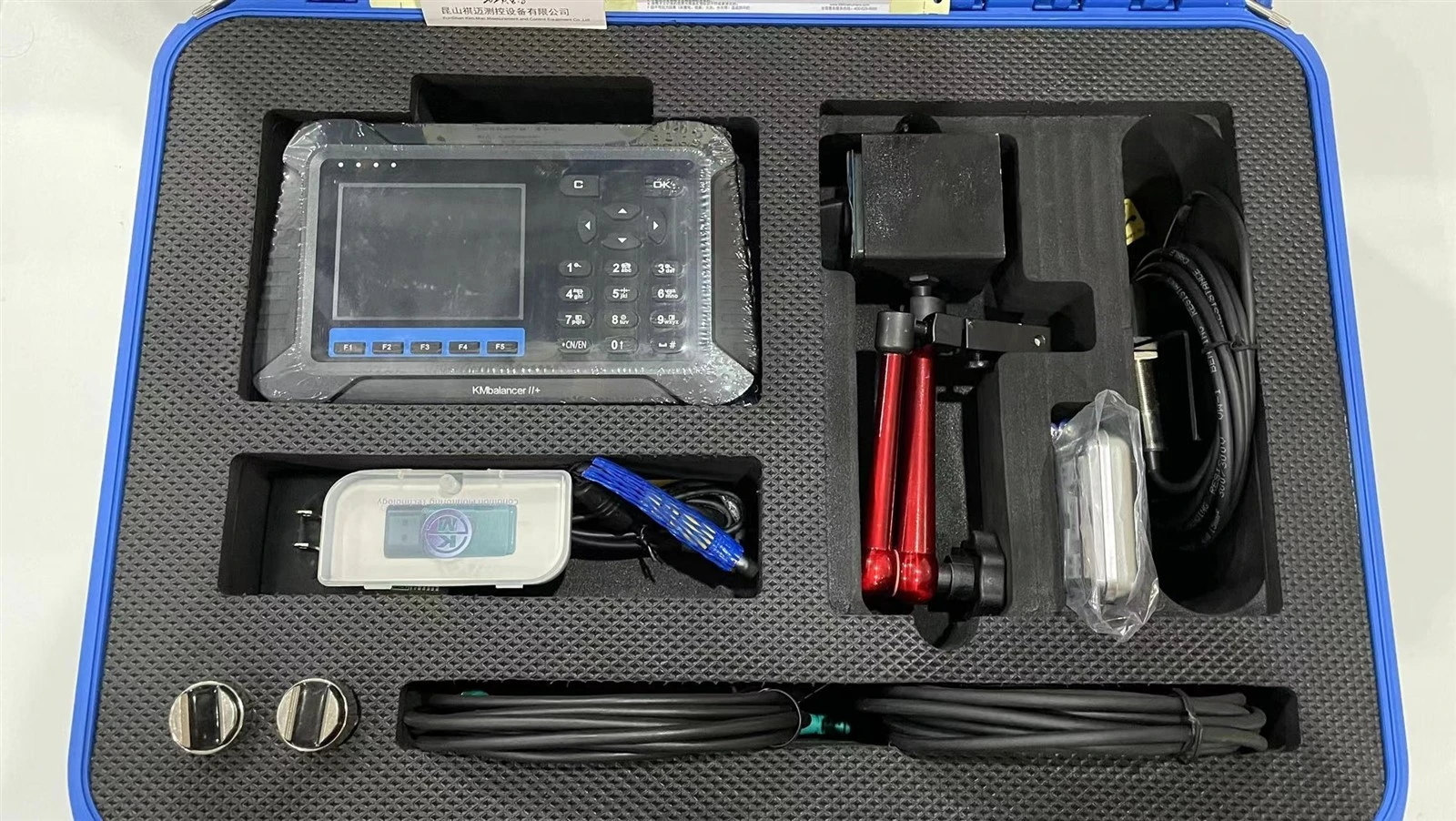
The selection of three vibration parameters (units) is described below:
1. Vibration displacement value
If it is necessary to pay attention to the position accuracy of the equipment parts or the damage caused by deformation, the peak value (or peak value) of the vibration displacement should be selected, because the peak reflects the limit value of the position change;
2. Vibration acceleration value
If you are concerned about the effects of inertial forces, you should choose acceleration, because acceleration is proportional to inertia;
3. vibration speed value
If the concern is the fatigue failure of the parts, the root-mean-square value of the vibration speed should be selected, because the fatigue life mainly depends on the deformation energy of the parts and the cyclic speed of the load, and the root-mean-square value of the vibration speed is just a reflection of them.
When choosing the unit of vibration measurement parameter, we should consider the following points:
1. International Standard System of Units
The units of vibration measurement parameters should conform to the international standard system of units, such as the International System of Units (SI) or other universal standard systems of units.
2. Characteristics of machinery
The characteristics of different mechanical equipment are different, so the units of vibration measurement parameters will be different. When selecting the vibration measurement parameter unit, the characteristics of the mechanical equipment should be considered to ensure that the measurement results are accurate and reliable.
3. Actual measurement requirements
In the actual measurement process, we need to choose the unit of vibration measurement parameters according to the actual demand. If we need to measure the vibration speed of the machine, we can choose units such as m/s or in/s; If we need to measure the vibration acceleration of a machine, we can choose units such as m/s² or in/s².
4. Vibration velocity value
If the concern is the fatigue failure of the parts, the root-mean-square value of the vibration speed should be selected, because the fatigue life mainly depends on the deformation energy of the parts and the cyclic speed of the load, and the root-mean-square value of the vibration speed is just a reflection of them.
For most vibration machines and equipment, the best parameter is the vibration speed value, most of them are to meet the ISO 10816, ISO 2372, ISO 3945 and other reasons for using this parameter, of course, there are some standards, according to the high and low frequency working state of the equipment, respectively select the amplitude (displacement) and acceleration, in addition to the need to do modal analysis, This is where you need a high-end vibration analyzer. In vibration measurement, it is very important to select the correct unit of vibration measurement parameter. We should choose the appropriate unit according to the specific situation to ensure the accuracy and reliability of the measurement results. Through reasonable selection of units, we can better understand the operation and problems of mechanical equipment, and then take corresponding measures to improve equipment performance and service life.
To learn more about vibration analyzer, please click :https://www.km-vibrationanalyzers.com/


